Shanghai Two Sessions: Officials Pledge Better Eldercare for 2026
Eldercare emerged as a policy priority at Shanghai’s annual Two Session meetings this week, as city leaders laid out plans for expanded services in 2026 to meet the needs of a rapidly aging population.
The Two Sessions, known in Chinese as lianghui, comprise the Shanghai People’s Congress and the Shanghai Committee of the Chinese People’s Political Consultative Conference (CPPCC), where officials review the past year’s performance and set policy priorities for the year ahead.
The urgency of reform is underscored by the city’s demographics. By the end of 2024, Shanghai had 5.78 million registered residents aged 60 and above, accounting for more than a third of its total population and among the highest in China.
According to the annual government work report released Tuesday, Shanghai added 3,852 eldercare beds, 57 community senior canteens, and 336 community elderly health centers in 2025.
Mayor Gong Zheng said the city will add 2,000 dementia-care beds in 2026 and establish 200 new community health centers for the elderly. Community-based institutions will also be encouraged to expand services such as help with meals, bathing assistance, and medical support.
Industry reports suggest China could face a shortfall of more than 5 million caregivers over the next five years. To address the gap, some delegates proposed strengthening career incentives and training pipelines, including closer links between vocational schools and hospitals.
CPPCC members also highlighted the mismatch between existing facilities and rising demand for higher-quality care.
Zhou Baoyun, a CPPCC member and director of the Shanghai Yihe Senior Service Center, said that while the city has around 178,000 eldercare beds, “many were built over a decade ago to multi-occupancy standards that no longer meet seniors’ growing expectations for privacy and independent living.” Chen Qiyu, another CPPCC member, urged authorities to repurpose underused government buildings and office spaces into eldercare facilities.
Delegates also called for greater use of AI and smart systems in eldercare services, including partnerships between care institutions and tech firms or via a unified eldercare data platform connecting civil affairs, health, and medical insurance systems.
Special attention was given to dementia and disability care. Chen called for expanded screening, wearable monitoring devices, and both institutional and home-based care solutions for people with cognitive impairment.
Chen told domestic media that Shanghai could serve as a model for other Chinese cities expected to face similar aging pressures in the coming decades.
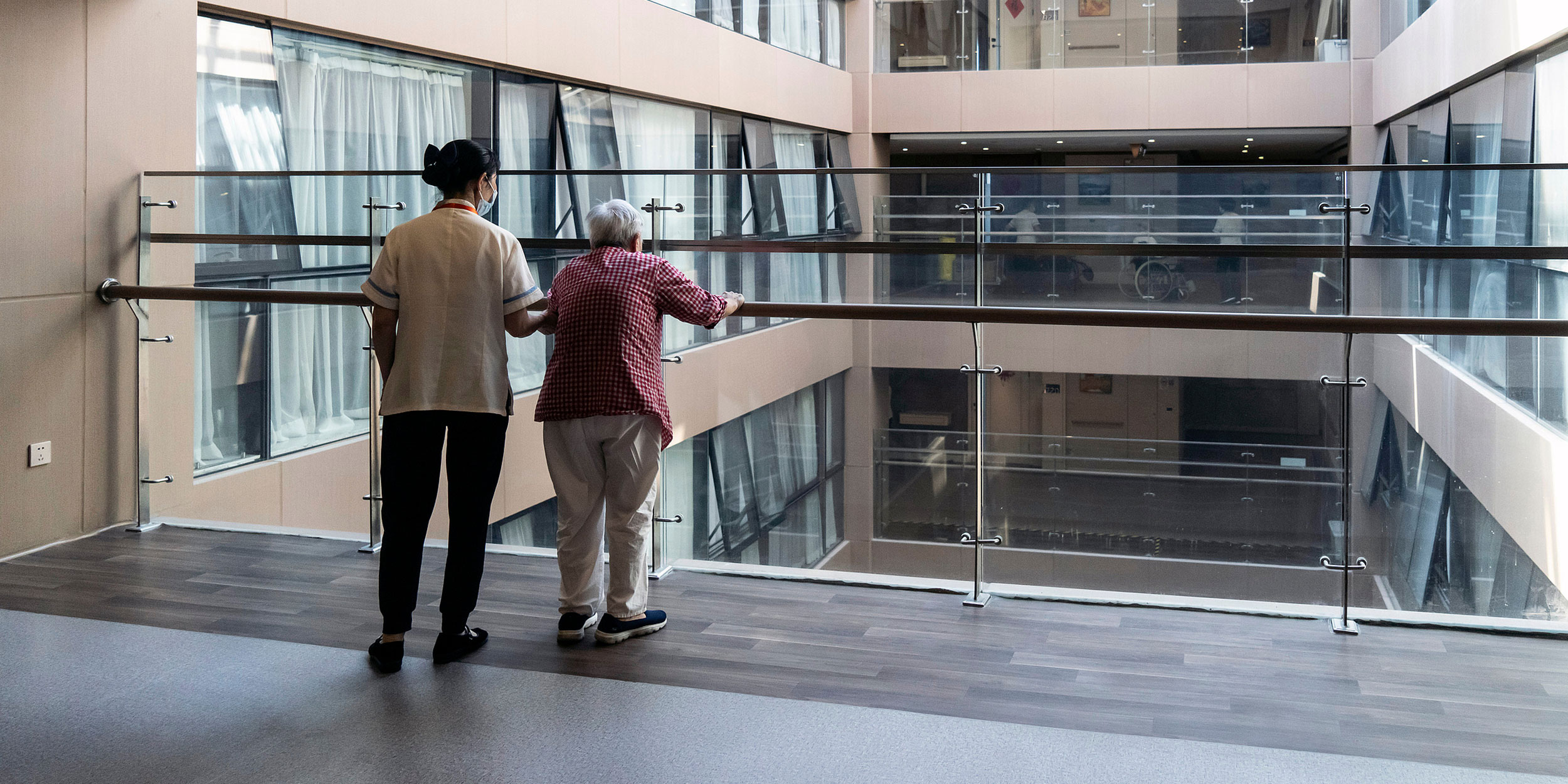
(Header image: A healthcare worker assists a resident at the Renshoutang Hongqiao Eldercare Home in Shanghai, June 6, 2025. Qilai Shen/Bloomberg via Getty Images/VCG)